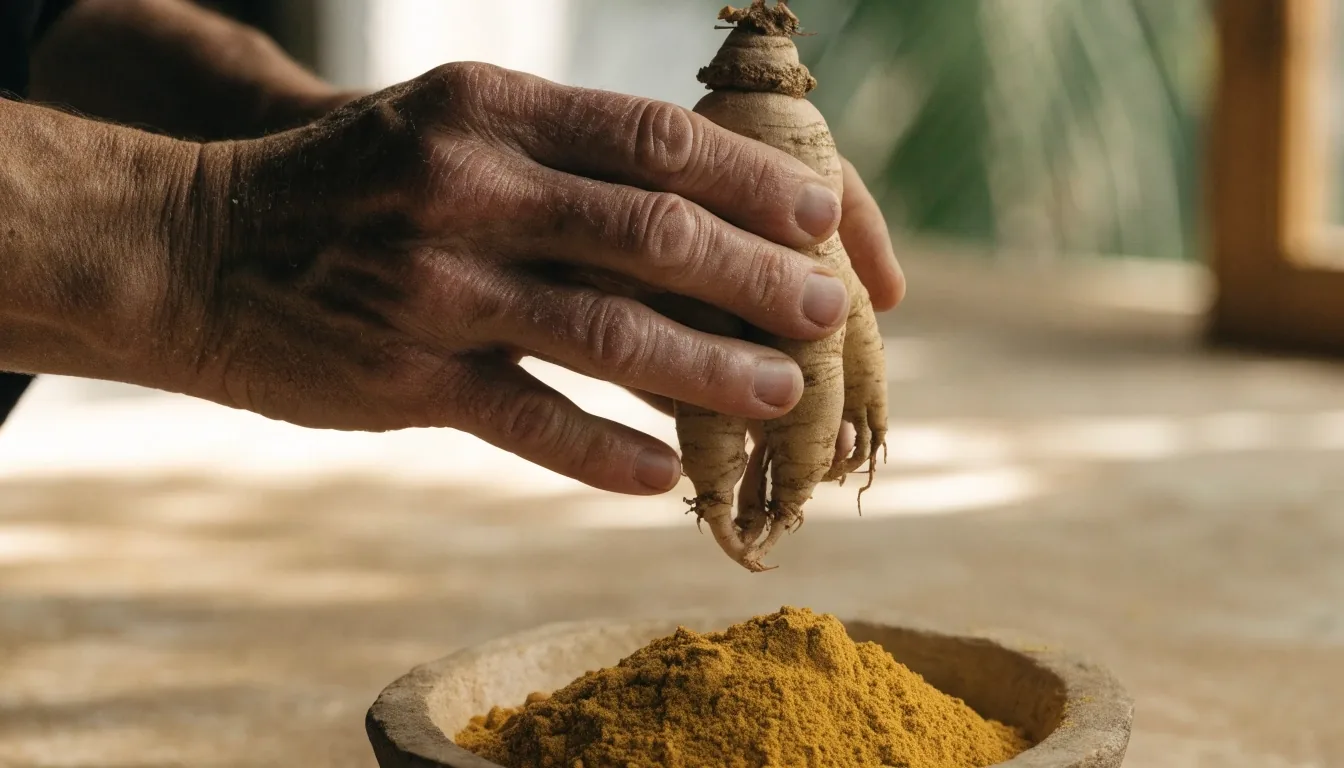
Ingredient reference
A plain guide to men's supplement ingredients
What ginseng, maca, pasak bumi, zinc and the other common names actually are, and how to read them on a label.
How to use this guide
This guide covers the botanicals and nutrients that appear most often in natural supplements for men sold in Indonesia, with a plain description of what each one is and where it usually shows up. It is a reference for reading labels, not a set of recommendations. Amounts and combinations vary by product, and the label in your hand is the final word.
Read it with a jar in your other hand. Pick the two or three lines that matter most for what you want from a product, check whether the label names them separately with an amount, and compare like for like across the shelf or a marketplace listing.

The ingredient shelf
Most men's vitamin formulas blend a handful of these together, so the same names repeat across products at very different amounts. Each row below gives the name, the form it usually appears in, and where you tend to meet it on a label.
Botanical
Panax ginseng
Root vegetable
Maca
Local botanical
Pasak bumi
Local root
Purwoceng
Mineral
Zinc
Vitamins
Vitamin C and vitamin D
Extracts
Saw palmetto and lycopene
Nutrients
B vitamins and magnesium
Compounds
CoQ10 and alpha lipoic acid
Panax ginseng
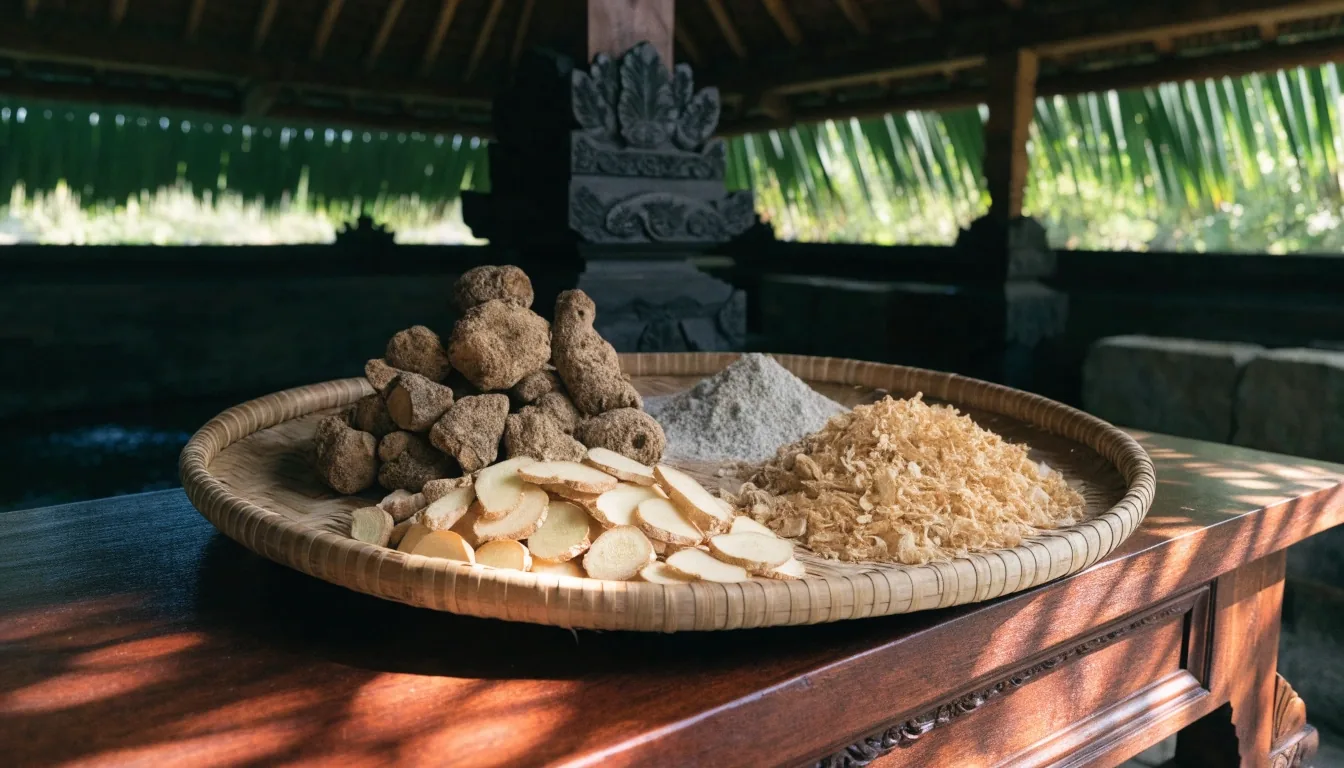
Ginseng is the most recognizable botanical in men's wellness worldwide, and it appears widely in Indonesian products. Formulas use the root, and a label may show it as a standardized extract or a plain powder. It is almost never used alone; most products pair it with other plant extracts or with vitamins and minerals for men.
When you compare two ginseng products, the amount per serving is the number that matters. An entry with no figure should be treated as unknown rather than assumed small. Standardized extracts also name the percentage of active compounds they are standardised to, which is worth knowing when two labels both say ginseng but at very different concentrations.
Where you tend to meet it: energy and endurance formulas, daily multis, and blended capsules that pair it with maca or pasak bumi. In a long ingredient list, ginseng is usually one of the two or three botanicals doing the heavy lifting.
What to check on the label
- Whether the amount is given per serving or per capsule
- Whether it is a standardized extract or a plain root powder
- Whether it sits inside a blend line with no separate figure
Why the number matters
Maca has no standard dose across products, so the figure per serving is the only comparable number. If a label groups maca inside a blend with no separate amount, you cannot tell how much is actually in the capsule. Two products both listing maca can sit far apart on that scale, and only one of them tells you where.
Maca
Maca appears in both imported and Indonesian men's formulas and is usually one component of a blend rather than the headline ingredient. It shows up in energy-oriented products alongside ginseng or pasak bumi, and its presence on a label often signals a formula built for stamina support rather than strict nutrient coverage.
Like most botanicals, maca has no standard dose across products. What that means in practice: you can compare the two jars only on the amount each one prints. A product listing maca at a clear milligram figure and another that buries it in a blend are not the same claim, even when both use the same name on the front.
Pasak bumi
Pasak bumi is the local botanical most Indonesian shoppers already know by name. It appears in stamina-centered blends and in local wellness coverage, and its presence often signals a formula designed for this market rather than imported wholesale. It is frequently combined with maca or ginseng, and some formulas use it as the primary ingredient.
The same labeling rules apply. A separate amount per serving tells you something; a blended entry tells you nothing. For many buyers, seeing pasak bumi named clearly and paired with a real figure is the first sign they are looking at a considered product rather than a crowded front label.
Local roots and what they signal
Purwoceng is less widely known than pasak bumi but appears in Indonesian herbal formulas, often listed beside maca and pasak bumi. It belongs to the same tradition of local roots used in stamina-oriented products. Other regional botanicals appear less consistently, so when you see one on a label, the useful questions are whether it has a named amount and whether the product also lists its other ingredients separately.
Local heritage is a reasonable reason to be curious about a product, not a reason to skip the panel.
Mineral
Zinc
Zinc is one of the few nutrients that appears in almost every men's formula, from basic multis to sports-oriented products. It is a mineral with a normal role in the diet, and men's formulas often include a higher amount than general adult multis.
Because zinc shows up in so many products, it is the nutrient most likely to be doubled when a man takes a multivitamin and an energy formula at the same time. Check both labels before stacking. If the combined amount looks high, that is a question for a health professional rather than a decision to make alone.
Stacking check
Read the zinc figure on every product you take in the same day, not just the newest jar.
Daily multis and sports-oriented formulas are the two common places zinc is listed.
If two products overlap on the same nutrient, the combined figure is the number that matters.
Vitamin C and vitamin D
Vitamin C and vitamin D are the two vitamins most consistently highlighted on men's labels, and both appear in daily multis as well as in sport-oriented formulas. Vitamin D is often included because it is a common shortfall in diets that do not include much oily fish or fortified food, and it is also the nutrient most affected by spending your days indoors.
Vitamin C is included both as a nutrient and because it fits general wellness framing. Neither is a performance ingredient, and neither needs to be dosed dramatically to be worth having. What matters for comparing products is that each one has a real figure on the label rather than a mention inside a vague nutrient blend.
Two habits that help
- Check the vitamin D figure in international units, not only the milligram column
- Compare the vitamin C figure across jars rather than trusting the front-of-pack placement
Saw palmetto and lycopene
Saw palmetto and lycopene are the two add-ins that most clearly separate a premium men's multi from a basic one. Both appear in fuller blends alongside alpha lipoic acid, CoQ10, and trans-resveratrol, and saw palmetto also appears elsewhere in the men's category. They are what makes the more expensive formulas look different on paper.
Whether they belong in your daily product is a personal call. What matters for comparison is that a well-built label lists each one with a specific amount, so you can place the two jars side by side and see the difference.
Saw palmetto
Berry extract. Shows up in fuller men's multis and in the wider men's category. Compare on the milligram figure per serving.
Lycopene
Associated with tomato and other red produce. Usually a modest amount, and one of the lines where premium products differ.
B vitamins and magnesium, and the premium extras
B-group vitamins appear in energy and endurance formulas because of their normal role in metabolism, and they also form part of most daily multis. Magnesium appears more often in sports-oriented products than in basic multis. Both are ordinary nutrients rather than exotic extracts, which makes them easy to compare across products: the label should give a number in milligrams or micrograms for each one. When a formula has a long botanical list and only a vague mention of B vitamins, the nutrients are probably a marketing afterthought rather than a considered part of the blend.
Lycopene, CoQ10, and alpha lipoic acid sit in the premium tier of men's multis. Lycopene is associated with tomato and other red produce; CoQ10 and alpha lipoic acid are compounds that appear in both food and supplement form. They are usually present in modest amounts and are part of the extras section of a formula rather than the core. If you are comparing two premium products, these are the lines where they often differ, and the amounts listed are the only fair basis for comparison.
Reading amounts without getting fooled
Per serving
Amounts per serving are the only meaningful figures on a supplement label. Everything else is arithmetic built on top of them.
Serving size
Serving size is the multiplier that turns a figure into a daily dose. A formula showing 100 mg of an extract at two capsules per day delivers 200 mg daily, and the same panel on a one-capsule product delivers half that.
Extract ratios
A 10:1 extract is more concentrated than a plain powder of the same weight, though the label needs to say so for you to know. When none of this is printed, the product has told you everything it intends to.
Use the same three checks when you are shopping in Kuta or ordering from a marketplace listing. The comparison gets much simpler once you decide that unlisted amounts count as unknown.

Questions readers send us
Which ingredients should I compare first?
What does a blend line hide?
Is a more expensive formula worth it?
How do I ask about a specific product?
Where to go next
Take what you have read here and put it against the actual products. The formulas page lists the men's vitamin range with their labels, the popular products page collects the ones Indonesian shoppers ask about most, and our team answers label questions directly during opening hours.
Reading the label, in short
If a product lists every ingredient in this guide with real numbers, it is at least transparent, which is the minimum standard worth paying for. If it hides them behind one blend line, move on to the next jar.
These products are dietary supplements, not medicines. Consult a qualified professional before combining products or changing your routine.